Showing posts with label Book Review. Show all posts

Tuesday, July 28, 2026

Reflections through a Demon Box


I recently finished reading “Demon Box” by Ken Kesey. Kesey is one of the great American authors, best known for his 1960s book “One Flew Over the Cuckoo’s Nest”. I went through a phase in the late 90s where I read Kesey, Tom Wolfe, Jack Kerouac, Allen Ginsberg, and Jim Morrison’s poetry. I also read a lot of Aldous Huxley, who remains one of my favorite writers. These literary figures were counterculture, pushing limits with drugs, free love, and other ideals and driving the hippie movements. Their writing showcases American during that mostly bygone era.

But back to Kesey. I bought Demon Box along with several Huxley books and Wolfe’s The Electric Kool-Aid Acid Test in my second-ever Amazon order on January 30, 1999. I have had this book for 27 years and never read it until now. I guess there is a bit of symmetry that 27 is how old Morrison, Jimi Hendrix, and Janis Joplin were when they died, and they were heavily inspired by that era and literature – The Doors is literally named after Huxley’s book Doors of Perception. So I have had Demon Box sitting on my shelf for a long time. About time I read it.

Published in 1986, Demon Box is not a great book. It is more like a mixtape of essays written in the late 1960s to the 1980s. Like most mixtapes, there are nuggets that stand out, but a lot of flotsam and jetsam. The parts that do stand out appealed not only because of the story, but because of Kesey’s position in life. The essays were written after Kesey stepped away from the counterculture scene to live his life with his family on a small farm in Oregon. He was still writing, but focused more on his rural, quiet life. He was no longer driving around the country with a bus load of hippies distributing acid and preaching against the powers that be.

Many of the better stories in Demon Box involve Kesey’s friends and acquaintances visiting him as they continue their wayward lifestyles. There are people fleeing to Canada, people convincing him to go to jubilees and rallies, and a gaggle of Hell’s Angels who hang out in order repair their motorcycles. There are also a few wanderers and vagabonds who want the famous author’s guidance and wisdom of which he is not in the business of giving. He is done with the scene. It’s not that he is embracing modernity or the materialism of the 1980s, but he is enjoying isolation with his family. Sorta like a psychological Walden Pond if Henry David Thoreau had cameos from friends.

Demon Box reminded me a lot of the 2016 song “Dorks” by Aesop Rock, the chorus of which goes “Party over here, I’ll be over there”. Like Kesey generations before, Aesop Rock left his scene - mid-2000s hip-hop – to live in Oregon away from the mainstream. Like Kesey, Aesop Rock is also an amazing wordsmith. Check out his song “Lotta Years” which preceded Dorks on the album, and is also about facing the passing of time.

Both Aesop Rock and Kesey have me thinking about scenes and aging. What does it mean to create as you get older? What does it mean to create and not be part of a scene? Perhaps you are a storyteller about the scene, celebrating what’s behind and recalling days past. Or perhaps creating for those who still ride with you in a way they understand. Maybe it’s a mix of both.

Time takes. It constantly moves forward. But time also gives. It gives opportunities to live, learn, love, and laugh. (Ugh, did I just use Live, Laugh, Love in a post? Sorry.) You can’t let getting older mean getting sad. Gotta leave room for new experiences. Sometimes a new excitement appears – such as my recent post on the Knicks winning the NBA Championship, something I never thought would happen. I might fall in love, get married, or have a kid one day. Yeah, I am getting old to be a dad, but let’s leave room for it. Let’s not close opportunities for moments just because of a number on a calendar.

My good friend Chris (some know him as SportsChump) recently wrote an essay on turning 58. Entitled “How To Tell If You’re “Young” Old or “Old” Old”, Chris and his friend J-Dub write about their life as 58-year-olds. While J-Dub is battling ailments and succumbing to an early bedtime, Chris is still bartending at a popular Irish pub, providing spirits for folks half his age. Chris golfs, goes to the gym, and is showing only a few signs of slowing down. He still works in the scene, albeit from the safety and financial benefit of behind a bar.

I am a decade from 58, but like Kesey or Aesop Rock, I have several scenes that I no longer affiliate with. Some of which I have never felt further from (looking at you, FSU). Many of the jobs and career fields I was once a part of I also no longer work with. 

But it’s the people. The good people, the friends, the family, the friends who turned into family, the co-workers who turned into friends, the 10, 20, 30-year friends who keep life exciting. It’s the real people. And I also always leave room to meet new people.

This is where social media can be deceiving. Connecting doesn’t mean friends. I’ve been connected to old college acquaintances for almost 20 years. I don’t know anything about them besides what they post online. And most of us of a certain age aren’t posting like we used to, and some us are leaving social media completely, leaving only a profile and connections on a friend list, but nothing of substance. If I really knew them, their presence on social media wouldn’t matter. I would know them in the real world.

Besides the people, it is the classics that I also find solace in. Timeless art, music, and literature that yearn to be discovered. I’ve been listening to a lot of classical, jazz, and soul albums recently. After finishing Kesey, I began reading Anatole France’s 1914 novel The Revolt of the Angels. Going back even further. Perhaps this 112-year-old work will inspire a scene in a yet-to-be-written novel.

One of the benefits of going back to the classics is retrospection. You read, sing, or explore works you once admired to see if they still reflect your beliefs. Can you still relate? Media of the past provides insight to how we’ve changed. Are you still the angsty teen listening to counterculture music or reading counterculture literature? 

Personally, I think I am done trying to change the world. I done with those scenes. Maybe I am just trying to save what’s left.

All this to say, I give Ken Kesey’s Demon Box 3 of 5 stars. Not good enough to stay on my bookshelf for another 27 years. Some essays were better than average, some were boring and haphazard. Kesey published Demon Box when he was 49. I will be 49 this year. Maybe that’s life.

Wednesday, February 4, 2026

My 2025 Year in Books


According to Goodreads, I read 22 books in 25. That's not bad. A few less than I read in 2024, but still a good amount. My goal was 18 and I exceed that.

Here are the books I read in 2025 from latest to earliest. If you want to connect with me on Goodreads, click here.     

Veil of Eden: Expired
Larkin, Andra
Fiction, Dystopian
5 of 5 stars
Finished Dec 31, 2025

Destined for Destiny: The Unauthorized Autobiography of George W. Bush
Scott Dikkers
3 of 5 stars
read, comedy, fiction, politics
Finished Nov 23, 2025

Screaming Streets
Jensen, Stephanie E. *
5 of 5 stars
read, fiction, horror
Finished Nov 16, 2025

Dissecting House (Mina Bassey, Serial Killer)
Jensen, Stephanie
5 of 5 stars
read, fiction, horror
Nov 11, 2025

House of Sunshine
Jensen, Stephanie E.
5 of 5 stars
read, fiction, horror
Nov 06, 2025

The Kitty Killer Cult
Smith, Nick
3 of 5 stars
read, fiction
Finished Nov 01, 2025

The Man Didn’t Want This Book Published
Scrubbings, Jordi *
5 of 5 stars
read, comedy, nonfiction
Finished Oct 02, 2025

Gone to the Wolves
Wray, John
4 of 5 stars
read, fiction, metal
Finished Sep 28, 2025
 
Smashed, Squashed, Splattered, Chewed, Chunked and Spewed
Carbuncle, Lance
5 of 5 stars
Finished Sep 18, 2025
 
The Fall of the Roman Umpire
Luciano, Ron
3 of 5 stars
read, comedy, nonfiction, sports
Finished Sep 07, 2025
 
Tales from the Dusty Tiger
Ginsberg, Joshua
5 of 5 stars
read, fiction, horror
Finished Aug 31, 2025

How Lucky
Leitch, Will
4 of 5 stars
read, fiction
Finished Aug 21, 2025

The Killer Angels (The Civil War Trilogy, #2)
Shaara, Michael
5 of 5 stars
read, fiction, history, war
Finished Aug 17, 2025

How to Love Yankees With a Clear Conscience
Whaley, Bo
3 of 5 stars
read, comedy, nonfiction
Finished Jul 15, 2025

We Sold Our Souls
Hendrix, Grady
5 of 5 stars
read, fiction, horror, metal
Finished Jul 03, 2025

Blood and Honor (Honor Bound, #2)
Griffin, W.E.B.
2 of 5 stars
read, fiction, war
Finished Jun 12, 2025

Heartbeat and Other Tales of the Weird and Macabre
Jensen, Stephanie E.
5 of 5 stars
read, fiction, horror
Finished Jun 12, 2025

Shook! A Black Horror Anthology
Barnes, Rodney
4 of 5 stars
read, fiction, horror
Finished May 16, 2025

Goon
Lee, Edward
4 of 5 stars
read, fiction, horror
Finished Apr 09, 2025

The Motern Method
Farley, Matt
5 of 5 stars
read, business, nonfiction
Finished Apr 07, 2025

Con-thology: Stories of Convention Horror
Ford, Douglas
5 of 5 stars
Finished Mar 08, 2025

Business @ the Speed of Thought: Succeeding in the Digital Economy
Gates, Bill
3 of 5 stars
read, business, nonfiction
Finished: 14 Jan 2025

Tuesday, January 20, 2026

Book Review: Beyond the Crossroads - The Devil in the Blues Tradition by Adam Gussow


With the release of the blockbuster movie Sinners, Beyond the Crossroads is a must read for anyone who wants to know the story beyond the story. Gussow thoroughly dissects the use of the term Devil in blues music from the earliest days before Robert Johnson, through Johnson's career, through the movie Crossroads, and into the 2000-era explosion of blues tourism in Clarksdale, MS. The book is split into several essays exploring the aspects of the devil and his association in the blues. Even though I thought I knew a lot about the subject, I learned a lot. Gussow is very, very thorough.

That said, Gussow writes like an academic. It almost too thorough. Beyond the Crossroads is not a quick read. The comparative theories and analysis create drag in the narrative. This is a book for the hardcore fans and academics, not for the casual blues fans. Even though the casual blues fans are the ones who probably need to read it.

Tuesday, October 28, 2025

Book Review: Gone To The Wolves by John Wray


I wanted to like this book so much more. Three teenage rock fans from Florida get into death metal, go to LA for the Glam scene, then end up in Norway during the height of the Black Metal craze. A metal version of Forrest Gump. 

The characters are unlikeable. They never really click as a unit. Their conversations are always antagonistic or purposefully misleading. They never say what they feel. That gets old quick.

The cameos felt forced. The climax was very rushed. And the epilogue was terrible. Kira, who is way too Manic Pixie Dream Girl, is so poorly resolved that I feel she will still have problems unless she gets into therapy or rehab. I was hoping to read that in the epilogue, but sadly there is no sign of real growth among any of the characters. And what happened to the international authorities and the other victims?

Lastly, as a Tampa resident, there is no such place as Downtown Ybor City (pg 68) and if one were to take the quickest route to Venice from Tampa International Airport (southbound I-275), I-75 is way more than 15 minutes away (pg 252).

So much potential.

Grade 3.5. A 3 is too low, but I feel like a 4 is too high.

Sunday, October 12, 2025

Book Review: Smashed, Squashed, Splattered, Chewed, Chunked, and Spewed by Lance Carbuncle


Ever read a book and ask yourself "what the hell did I just read?"? Not in the way that it wasn't in English, or didn't make sense, but in the way that it was such a trip that you are taken back and knocked on your heels from the sheer insanity of the written word.

From the simple premise of a man driving from Florida to Ohio to pick up his dog comes a wild adventure featuring roadside explosions, deals with the Devil, stolen wiener mobiles, and copious amounts of drug use.

I met Lance at a convention a few years ago. He is a very creative and interesting artist and author. His stuff borders on the weird. Correction: his stuff is weird. Very weird. In a fun way. In a crazy road trip through a hurricane trying to find a basset hound via a spiritual connection sorta way. But you have to stop off in small town Tennessee first to pick up your soul because you traded it for a one-night stand with a bar wench.

If that makes sense, or if that piques your interest in any way, shape, or form, I highly recommend you pick up Smashed, Squashed, Splattered, Chewed, Chunked, and Spewed anywhere weird books are sold. 

Monday, May 12, 2025

A Current Reading of Man, The State, and War by Kenneth Waltz


(Cross-posting this here. Posted on my Medium.com website several years ago.)

As a former International Affairs scholar, I accumulated a lot of political theory books. Some I read, some I hope to, and some I may never get to. But they look good on my bookshelves.

One of the books I have always been interested in reading and recently finished is Man, The State, and War by Kenneth Waltz. Waltz was a giant in International Affairs according to his obituary in the New York Times and Man, The State, and War was his first major work. What started as his doctoral dissertation became one of the premier books for explaining how nation states interact with each other.

According to the price tag on the used copy I have, I either bought it for $1 or I acquired it from the shelves of my mother’s since closed used book store. Or maybe I bought it from her for a dollar.

Unlike other art, we don’t price books based on their relevance to society. $1 for a book that helped form an entire line of modern political thought. Although some who oppose the multi-national approach the world has taken in the last 60 years may feel $1 or even less is appropriate.

That’s my goal here: to publish my thoughts on Man, The State, and War and look at Waltz through the spectrum of what is currently happening internationally in 2018.

First and foremost, Man, The State, and War is a look at individuals, intra-national, and international relations. For Waltz, “structured realism” rules when it comes to international affairs. Waltz writes that nation states are the top negotiator of power at the international level.

That is true if one only looks at wars between nations. One nation’s military power versus another nation’s military power.

But that perspective is simplistic on a few levels.

  • Nations engage in military operations versus powerful international organizations quite often. Al Qaeda, violent extremist organizations, or even crime syndicates have a say in the defense and security of nations. In many cases, these supranational organizations have has much capabilities as nations. But while they operate on a low-cost, high-impact strategy, for Waltz, you have to pay the high-cost to be the boss.
  • Militarily isn’t the only way nations engage. Although Waltz writes a bit on trade and tariffs, the book’s focus is on war, but doesn’t mention any of the other platforms of conflict.
  • Since the book was written, international arbiters have grown. NATO, the United Nations, the IMF, the World Bank, and a list of trade blocs have worked to mitigate conflict between nations. Waltz even gets into the benefits of a European bloc before the European Union was formed.

Nation versus nation — the realist perspective — is important and valuable in the same way Clausewitz’s “total war” is important: as an easy-to-digest default setting. Once you understand checkers, you can move to chess. Once you understand chess, you can move to three dimensional, four dimensional, or multi-dimensional chess.

Of course, Man, The State, and War is a product of its time. Although Waltz’s research is deep, it is primarily focused on Western nations or the Soviet Union, as those were the main blocs of power immediately following World War II. He writes little of Asian or Middle Eastern relations. Is their perspective on individual, interstate, or intrastate relationships the same?

Without understanding different cultures, values, and individuals and the philosophical underpinnings of their relationships with their states, it is difficult to understand how they will interact internationally. If nations are a reflection of the human condition, what if the human condition is different in different regions? Not every region shares the same value set.

(Here we won’t get into tribalism tearing the fabric of states apart. But I will say our state-creating individual agreements are getting weaker.)

 Waltz concludes with the idea that international organizations are very important, as they minimize the chaos of self-interested nations acting as humans in chaos would. They create a bargaining mechanism to reduce conflict.

While we had decades of building these international systems following World War II, they have been under attack in the last few years. What would Waltz have thought of the pushback of MAGA-based nationalism, which is an extension of Brexit-based “go it alone bilateralism”? I would love to see an educated debate by people on both sides: modern nationalism versus classic international philosophy, which attempts to minimize Hobbesian chaos-led conflict.

On one hand, I am far from a financial expert or an economist, but isn’t the goal to minimize risk in the long term? These modern social movements may actually increase risk of conflict. Perhaps the economic structure has effectively detached itself from the social structure and from their perspective, bilateralism is not a bad idea. Social ideals will sort themselves out. Just vote for the person who makes the best economic sense.

I am not sure Waltz would agree.

On the other hand, Waltz describes collaborative mechanisms as a way to temper the aspirations of nations, as states and agreed upon laws temper the aspirations of man. What happens when other nations are free riders in an alliance? What if a nation wants to redraw from an international organization not because it wants to conquer its neighbors, but because it is tired of paying for the bad decisions of the neighbors it once agreed to work with?

Do the nations rewrite the agreements or does the international structure break apart? Is war a necessary cleansing agent for ill-performing international agreements?

Perhaps chaos is the default and man’s occasional pauses of peace and agreements are socio-economic experiments he has to keep working out until he finds a model that accounts for all aspects of human and state behavior — from overly aggressive to overly lazy.

Maybe we are at the cusp of another inflection point.

Monday, March 17, 2025

Book review - Con-Thology : Stories of Convention Horror


As a member of my friend Josh Ginsburg's Patreon, I received a copy of Con-Thology, a horror collection he was recently published in. For $3 a month, I get a sneak peek at all of his prolific writings and other membership perks, to include Con-Thology.

As the title says, Con-Thology is a collection of horror stories that take place in the halls of a convention. Conventions can be organized chaos, full of vendors and characters and celebrities and guest appearances. You never know who or what you might run into in at a convention. These stories up the ante and increase the chaos of convention life. 

Con-Thology is short. It is only 55 pages, including table of contents and author bio page. You can read it in one sitting. Each story ranges between 8 and 15 pages. They get to the point and bring the weirdness and horror. I am going to review each and give my personal opinions in order of appearance in the book.

1) Cosplay by Josh Strnad

The anthology starts with the shortest story in the collection. Josh tells the tale of a loner and social outcast who embraces his mysterious wraith costume and enjoys the attention he gets from his fellow attendees while still being able to hide within his disguise. His ability to hide in his mysterious attire provides cover for his darker intentions.

2) Autographed Edition by Douglas Ford

The set-up for this story is awesome. I love the idea of a reader finding a new release from a deceased author and further finding that the book is autographed with the author's signature. There is so much mystery and potential with that premise. It could have been its own book. But in the world of Con-Thology, other authors and bargains and ceremonies enter the story and while we pleasantly wade in the macabre and occult, we shift from the initial mystery to something more ceremonial. Perhaps Douglas will revisit that premise and flesh it out into something larger someday.

(Note: I've met Doug. He and I did a book signing coordinated through Josh in St Petersburg last fall. Doug is also quite prolific, with several novels and collections to his name. I own The Infection Party, although I have not had a chance to read it yet.)

3) The Sally Anne Test by Elaine Pascale

Another very weird and usual story - which is to be expected of course. I enjoyed the point of view of someone who had been sheltered and used as an experiment by a manipulative parent. The horror of psychological manipulation is creepy and a fertile ground for something bad to happen. Eventually, the young girl not only has a chance to be around others, but she also has a chance to meet her favorite graphic artist. Or does she? The twists and turns of this story make it a very interesting read.

4)  Closing Ceremony by Joshua Ginsburg

I had the pleasure of reading this story before it was in Con-Thology. Josh asked my thoughts on the story and the unique way it was written. I liked it then and I like the finished product. This story takes a unique perspective on a convention annihilated by a disaster. It reads like an investigative report, full of details and observations. There are no people, no characters, and no dialogue. It is an interesting read, chock full of name-drops and Easter eggs. And being that the convention hall is utterly devastated, Josh's story is a good way to end the book. Even if you have a wristband, you are not going back in after that.

Overall, I enjoyed Con-Thology. It was a fun, creepy, quick read. Highly recommend signing up for Josh's patreon for only $3 a month or finding any of the authors and picking up a copy of Con-Thology at your nearest convention.

Monday, December 16, 2024

Book Review: Devil's Contract by Ed Simon


My Goodreads review: As much a philosophy book as a history book, Devil's Contract is a very interesting look at the concept of deals with the Devil in fiction and in history. While informative and very well researched, some of the philosophizing can be a bit wordy and there are also some parts where I feel the analogy was stretched to fit the narrative. But otherwise, I enjoyed this. Fun read.

As much a philosophy book as a history book, Devil's Contract is a very interesting look at the concept of deals with the Devil in fiction and in history. Throughout history, the idea of dealing with the Devil has been a part of the human experience. Author Ed Simon reminds us that the first humans in the Bible, Adam and Eve, dealt with the Devil, exchanging their eternal life for knowledge and an apple.

Needless to say, deals don't often go humans' way. Many times, humans need divine intervention to get out their deals with the Prince of Darkness. Simon discusses examples in which the Virgin Mary helps sinners get out of their hellish predicaments. Sometimes God has to get involved and sometimes the human is damned and has to live with their unfortunate choice.

Devil's Contract definitely made me think. I would never have thought that Satan's meeting with Jesus in the desert in the New Testament was an attempted deal with the Devil. Satan was appealing to Jesus's human side, which is always vulnerable. Simon goes through thousands of years of examples of vulnerable humans, from Marlowe and Goethe's Faust characters to the real Faust, to show this trend. The book is extremely well researched.

But as I mentioned in my Goodreads review, Simon can lose the reader in his philosophical points. There are a few sentences that just didn't make sense, no matter how many times I read them. There were also several sentence fragments that had me scratching my head, thinking I missed a word. Although these grammatical faux pas made me stop, they didn't take away from my overall enjoyment of the book. But it means Simon's editor could have used another look through.

Some of Simon's analogies were a stretch. I still don't understand how capitalism is a deal with the Devil and if it is, what about other economic systems? Are they better? And the section on the atomic bomb wasn't very clear. What about other weapons? Does mutually assured destruction mean we have all signed deals with the Devil?

I did however really like Simon's conclusions on "terms of service" and other agreements we automatically sign in exchange for the ability to use our phone and apps. The power of these devices and programs comes with a choice. Usually it means we agree to send our user data and sometimes our personal data to companies that don't have our privacy in mind. Is that a deal with a Devil? Maybe not in the Biblical sense, but maybe in a modern, technology sense.

That's the point Simon wants to leave us with. As we no longer believe in demons and Devils as they did five hundred years ago, are there still Devils in our society and we still dealing with them?

Recommended. 4 Devil horned stars out of 5.

Tuesday, October 29, 2024

Book Review: My Real Dad Was a Stripper by Angela Scott


Quick interesting autobiography of Angela Scott, aka p*rn star Lexi Stone. Mostly takes places from her teen years to early 20s leading to her decision to get into the adult industry. There is a lot here that she unpacks. Bad relationships, good relationships, love, pain, death, birth, and how she kept a hustler's mentality, trying to make money to survive on her terms.

If I have one critique, it is that it ended abruptly. I would have like to have seen a second-to-last chapter on what her family, etc thought of her success in the industry, career highlights and insights, etc. Also curious if she dealt with the traumas she talks about often. Did she do therapy or is this book her therapy? Maybe there is a sequel coming. Overall, it is an interesting peek into the life of someone in the adult industry.

(Note: I did an interview with Angela way back in 2007 when she was modeling for Playboy before getting into p*rn. I googled her to see what she was doing these days and found her current career and her book. It was very interesting to see where my interview fell in her life.)

Grade: 5 adult stars of 5


Monday, October 21, 2024

Not so Serious Book Review: The Great Unraveling: Losing Our Way in the New Century by Paul Krugman


A clear money grab by Krugman to put all of his columns over 5 years or so in a book. One can only read his thoughts on social security or the California energy crisis so many times. Summaries would be a lot better.

I did find his thoughts on how extreme the Bush Administration was very interesting. The Bush Administration is small potatoes compared to the grift of the Trump Administration. But I have no interest in reading 200 columns from Krugman on that subject.

Started: 9/4/24

Completed: 10/12/24

Grade: 3 unraveled stars of 5


Connect with me on Goodreads for more book reviews and info on my books.


Michael Lortz's books on Goodreads

Sunday, January 22, 2023

Book Review: Too Sweet — Inside the Indie Wrestling Revolution


Back in 2010, I ran social media for a small, local independent wrestling organization in Tampa, Florida. All-Star Wrestling of Florida was as small and as local as wrestling comes — a bar show featuring mostly talent from the Central Florida. Attendance was lucky to reach 100 paying patrons.

Despite the small presence, ASW Florida still attracted some big names in the wrestling world. WWF legend Sunny made an appearance. ECW legend Bill Alfonso made an appearance. Shawn Spears worked a few matches. Eventual GCW co-owner Danny DeManto was a regular contestant. Then-TNA stars Jay Lethal and Samoa Joe were frequent attendees who watched from the bar.

After ASW Florida folded in 2011, I stopped being as interested in the indy scene. I still attended show at wXw, Afa the Wild Samoan’s developmental, watching future WWE talent such as Sean Maluta, Kona Reeves, and the widely-traveled Mercedes Martinez. But I attended because the Anoa’i Family has become family to me and my family. Only going to wXw meant the underground wrestling scene was no longer my scene.

I also stopped writing about wrestling as much. For a while I was a guest writer on the now-defunct Walls of Jericholic — The Wrestling Blog website. Although we often had different opinions, their editor allowed me to write my views through the prism of the Florida indy scene.

So it was with great interest that I read Keith Elliot Greenberg’s “Too Sweet: Inside the Indie Wrestling Revolution”. Too Sweet covers independent wrestling from its beginning as “renegade promotions” in the territory days to a viable source of entertainment in the WWE-dominant days to the gathering of the top stars to create a WWE-level alternative in All Elite Wrestling (AEW).

Although Greenberg writes about the big Japanese wrestling leagues, and mentions pro wrestling in the UK and Mexico, he focuses most of the story on Ring of Honor, CHIKARA PRO, CZW, GCW, and other US-based independent organizations. Of course, hundreds, if not thousands, of other independent feds went unmentioned, but to write about them all would require volumes. Credit Greenberg for keeping a narrative, even if none of my local indies were mentioned.

Also to his credit, by keeping to these top independents, Greenberg stays away from the criticisms of independent wrestling — that is has led to a watered down product because everyone with a ring is putting on shows. As a matter of fact, Greenberg almost embraces the low bar of wrestling promotion. Veterans of yesteryear state the high bar kept the wrestling community tight and ensured the fanbase received a quality product for their money. The lowered bar means an open market, where fans dictate the type of entertainment they want to see. Greenberg seems to favor the latter, not the former.

While I enjoyed the tale of the indies, the narrative almost works against Greenberg. As the book progresses, the book becomes The Road to AEW, with the Young Bucks, Cody Rhodes, Kenny Omega, and other stars of the present organization becoming the focus of the book. The focus on the indie organizations is left behind. How they are doing in 2020 would have made a great epilogue. Perhaps that is covered in his book Follow the Buzzards: Pro Wrestling in the Age of COVID-19. I might have to pick that up as well.

(Quick aside: While WWE was hunkered down in Tropicana Field during the pandemic, I ran into WWE stars Jey Uso and Otis at several Tampa-area sports bars. Joined them a few times for dinner and drinks. Family is family.)

Despite my critique of Too Sweet’s final focus, the rise of AEW as a major wrestling promotion was and still is a big deal. AEW is an organization primarily run by wrestlers with the focus of taking on WWE. Unlike TNA/Impact, AEW was backed by a billionaire family and immediately landed a major TV deal. Initial investment combined with the wrestling buzz generated by market-savvy wrestlers made AEW’s launch “must-see TV”. That is definitely a story worth telling.

So what is next for the indies? Small wrestling organizations filled with weekend warriors doing their thing in flea markets, gyms, and VFW halls won’t get the same attention as AEW. But given the highly volatile business of pro wrestling, some small indies might last longer.

Tuesday, September 13, 2022

Curveball at the Crossroads Review by Guy Who Reviews Sports Books


Book reviewers are busy. There are a lot of books published and a lot of books to be read. On this site, I think I have reviewed maybe a dozen or two. I can't imagine hosting a website dedicated to regularly reviewing books. But thankfully, some people have better dedication to reading and writing than I do.

Lance Smith is one of those people. Lance is a sports book reader who writes for his aptly named website The Guy Who Reviews Sports Books. Very early on in my marketing process, I sent Lance a copy of Curveball at the Crossroads. As you can see in the image, it is the first edition, which was no available as of November 2021. But that is the version Lance had and that Lance eventually read.

I emailed Lance several times, typically once every few months, to see where Curveball at the Crossroads was in his to-be-read pile. Every avid reader has a to-be-read pile. Finally in August, Lance emailed me to say he was starting the book. A few weeks later, he emailed me to say he enjoyed the read and that the review was published on his site.

A very good rating is worth the wait.

Lance had a lot of great things to say about Curveball at the Crossroads. For example,

This story was an enjoyable read for a few reasons. One is that Lortz developed his characters well, especially JaMark, his love Betsy, JaMark’s Uncle Rufus and Inga, the old woman who Uncle Rufus said was the only one who could help JaMark.  All of them are people with whom the reader can relate, even if the reader was never a major league pitcher, an awesome Southern cook or someone who had trouble staying out of jail.

Click here to check out Lance's write-up about Curveball at the Crossroads.

And if you haven't picked up at copy yet, here is the Bookshop.org link: CURVEBALL AT THE CROSSROADS

Monday, August 29, 2022

Curveball at the Crossroads Review in NINE: Baseball Journal


A new review of Curveball at the Crossroads was published in NINE: A Journal of Baseball History and Culture, printed by the University of Nebraska Press.

Check it out here:

Curveball at the Crossroads by Michael Lortz (review)

Always great to be compared to WP Kinsella and Field of Dreams.


Reviewed by:
Grace Morrison 

Michael Lortz. Curveball at the Crossroads. Winter Park, FL: Legacy Book Publishing, 2021. 266 pp. Paperback, $19.91.

Most scholars of baseball literature agree that serious adult fiction, books with more complex characters and story arcs than found in the early twentieth-century “Baseball Joe” books by Lester Chadwick, began in 1952 with Bernard Malamud’s The Natural. By the end of that decade Mark Harris had published three of his four Henry Wiggen novels, including Bang the Drum Slowly. While some authors wrote the occasional baseball novel, it was not until Canadian writer W. P. Kinsella published Shoeless Joe in 1982 that an author became a preeminent writer of baseball fiction. More recently, writers like David James Duncan (The Brothers K) and Chad Harbach (The Art of Fielding) have released baseball novels to great acclaim, but neither has continued in the genre. Now, however, Michael Lortz’s debut novel provides readers with a new name in baseball fiction: JaMark Reliford.

Reliford’s name is known far and wide for his pitching streak. He plans to get out of his podunkville hometown of Rosedale, Mississippi, by way of baseball. JaMark is starry eyed with fame as opponents step up to the plate in fear, and his fans are always cheering.

But after a career-ending shoulder injury, JaMark leaves home without a purpose. He wanders along a path in solitude and drinks his way to a literal and proverbial crossroad in rural Mississippi. In his hopelessness an ominous figure approaches him and offers a tantalizing bargain. The figure offers guaranteed fame and success if JaMark will sign over his soul. JaMark, in his inebriated state, must choose what he values most. He soon discovers this decision will define the rest of his life. [End Page 141]

Curveball at the Crossroads is a quick read that blends a familiar Faustian story arc with sports fiction. Detailed accounts of JaMark’s games and stats will transport baseball fans to the scene, but all readers will be compelled by first-time author Michael Lortz’s character-driven plot. Lortz uses dramatic stakes for his characters and a dry sense of humor to keep the reader entertained. He pays close attention to developing his characters, with adjectives and other descriptors woven within each moment of dialogue. The brief chapters and simple language keep the story moving toward the final swing. This page-turner adds a supernatural aspect to the idea of flash-in-the-pan athletes and keeps the reader wanting to know more.

True to baseball fiction in the style of Kinsella, Lortz juxtaposes a detailed and realistic account of a baseball player’s life with magical realism to accentuate the similarities between the concept of baseball and the nature of life. Lortz reveals the humanity of JaMark and the characters surrounding him through conflicting decisions of loyalty, religion, morality, family, and love. As JaMark uses unnatural means to get back on track, he compromises everything he loves and values outside of sports, as many athletes do. Despite the struggle the story is ultimately about a young man who must reconcile with his past for the sake of his future in hopes of a second chance.

Copyright © 2022 University of Nebraska Press

Tuesday, June 21, 2022

Reading Dostoyevsky Short Stories


I have a lot of literary classics on my shelves. Too often, however, I get caught up in reading the latest and greatest in modern literature to take a step back and enjoy something timeless. So it was with great interest that I dove into two collections of Fyodor Dostoyevsky short stories. These two books contained a few of the same stories, but were not completely similar. There were 13 short stories in total, but three were in both, leaving 10 unique short stories from one of the greatest names in Russian literature.
 
Dostoyevsky is a difficult read. Not because it is overly dense or dry – although one of the stories was incredibly dry, individual breakdown later – but because Dostoyevsky’s work comes from a period where male figures were the end-all, be-all of the story. Only in a rare case in these stories are women treated decently. Not well, just decently. Throughout the selection, women are bullied, beaten, mentally tortured, and overly doted upon. To put in modern parlance, there are serious incel themes in Dostoyevsky’s short stories. Enough for me to have to research what other writers have already written about Dostoyevsky’s possible issues with women. Granted, I only read 10 short stories of his incredibly prolific selection but there was a too many occurrences to discount. 

Let’s look individually at a few of the 10 stories I read: 

White Nights – This was the only story I had read before. Years ago, I remember enjoying this story but upon a second read, the main character definitely has social problems. In this story, a male loner meets a sad young girl along one of his nightly walks. Despite her telling him she has a love interest, he claims to fall in love with her over the course of a week. While her current beau is out of town, our loner protagonist keeps her company and they do get to know each other. When she claims she doesn’t know if her interest will be returning, the main character suggests she write him a letter. There is a delay in the love interest’s reply, disappointing the young lady and making the main character think he has an opening in the life of the one woman he has ever talked to ever. After the delay, the love interest returns and the main character resigns himself to the lonely existence he had before with no interest in finding anyone new. 

Did 19th century St Petersburg have that bad of a social scene or was the main character that anti-social that he, in his 20s, could not imagine finding anyone else? He only knew this girl for a week and he was convinced she was the girl of his dreams and that there would be no other opportunities for a relationship. Dostoyevsky captures incel thinking here generations before the term became popular. 

The Christmas Tree and a Wedding – This story was disturbing for a modern reader. It was short in the book I have, at barely 12 pages. But its content made me feel somewhat dirty and incredibly annoyed. This story begins with a socialite attending an end-of-year party for the pre-teen daughter of a prominent gentleman. While there he notices another socialite, this one with a sour-temper and poor demeanor. This second character attempts to make good with the prominent gentleman and tries talking to the young girl. The narrator thinks it odd, but continues his own socializing. Five years later, he walks past a wedding. When he looks inside, he recognizes the bride as the same young girl, now 16, and her husband as the poor demeanor, sour-tempered man from the previous party. The narrator describes the young bride as disinterested, teary-eyed, and looking for mercy. 

I guess this was commonplace in 19th century Russia but reading about a teenage girl who was courted then married to an evil man by the age of 16 is creepy. I realized Dostoyevsky writes about the downtrodden and the mistreated often, but the acceptance of the situation by the narrator made me do a double take. I had to re-read the final page where the narrator notices the couple, sees the young girl’s plight, but still walks out of the church and goes about his business. The young girl has no agency, rather she is a pawn between the rich father and the opportunistic antagonist. 

Notes from the Underground – I really did not like this story. The first half was the rambling of an anti-social man with severe social anxiety. The second half was his description of events leading up to him being completely anti-social. It reminded me of the movie Taxi Driver and there are others who make that connection. Perhaps I should appreciate Dostoyevsky for creating the genre of disgruntled, frustrated men who look negatively at the world’s progress. Maybe if I was more like that, I would appreciate it more, but that’s not me. 

While the comparisons to Taxi Driver are apt in the first half of the story – which really could have been cut or switched with the second half – the second half of the story is even closer to Scorsese’s film. After 50 pages or so of his anti-social screed, the narrator tells a story of how his life with severe social anxiety. He has few, if any, friends, he over-analyzes every interaction, and tries far too hard to impress people. When they either react or fail to react, he completely misreads their opinions of him. After completely fumbling an attempt to socialize with past classmates, he gets drunk in their company and desires to fight the leader of the group. When he gets to their watering hole ready to fight, he finds no one but a prostitute. He sleeps with her, then goes on a rant, insulting and degrading her. He then offers to help her and get her out of her lifestyle. 

Following those events, the prostitute does find him and looks to better herself. But instead of being the hero, his social anxiety again flares and he breaks down in front of her. After she realizes he is social imbalanced and only talks a good game, she leaves. He returns to his over-analyzing and anti-socialness. 

Again, Dostoyevsky gets credit for popularizing and breaking ground with the anti-social anti-hero, but I finished this story thinking this character seriously needs help. 

A Gentle Creature – Another horrible main character and another tragic woman. Again, our narrator is a male with serious social problems. This story starts with a man sitting next to the body of his deceased wife, who has recently committed suicide. That might be a sympathetic premise if not for the fact that he mentally tortured her. For some reason – perhaps it was the culture at the time – our narrator has a complex about owning a pawnshop. He is also battling guilt for not being as aggressive during his time in the service as those in his unit. He takes both of these guilts out on his wife. 

Of course, just as in The Christmas Tree and the Wedding, the main character of A Gentle Creature is a creepy man, this time in his 40s, with an obsession with a younger bride, again 16. I struggle to think how these two could have interacted as husband and wife. He chides her for her immaturity and passion, not realizing that she is not an adult, at least by modern standards. He often mentions that he has to break her of her old ways of thinking. His methodologies include lying to her, ignoring her, and not telling her any of his faults until it is too late. While he does this, he also holds over her head the broken family and poor circumstances she came from. 

There is a scene in this story that is reminiscent of a scene in another Scorsese film, Good Fellas. Struggling with her abusive husband, the young girl takes a gun and points it to the main character’s head in an attempt to kill him and end their marriage. Whereas Henry Hill grabs the gun from his wife, the main character in A Gentle Creature lays silent, calling her bluff. When she fails to pull the trigger, he congratulates himself for breaking her down again. 

The torture eventually gets to the young girl and she throws herself out of an upper floor window, plummeting to her death. After she is gone, the main character remains clueless, not realizing the amount of stress he put on her. 

I am so curious as to Dostoyevsky’s inspiration for this story. Another story in which I ended up despising the main character. 

Akulka’s Husband – This story was very short, only 10 pages, so I will keep the review short. But it is just as disturbing. The main character is a young man in prison who tells the tale of why he is incarcerated. In his younger years he associated with the local bully. Being from a poor family, he thought this was the best way to gain prestige. After the bully claimed to have slept with a local rich man’s daughter, the main character joined the bully in belittling the girl, calling her unpure and a whore. Their torments caught on throughout the town, making her undesired by any other man. The main character’s mother, knowing the girl’s reputation, tells her son to marry the girl so they can be part of a richer family. When he does, he faces the wrath and ridicule of his friend, the local bully. 

During the course of their marriage, the main character finds out that the bully never did sleep with his now wife. When he accuses the bully of lying, the bully flips the narrative and tells the husband that he was drunk during the ceremony so there is no way he was in his right mind during the vows or the consummation of the marriage. The main character agrees with the bully, claiming again that the bully is his best friend. The idea that he might have been tricked into wedding the girl infuriates him and he repeatedly beats her until bringing her in a field and slitting her throat. 

When the authorities find the wife, they arrest the husband, and put him in prison. 

The Dream of a Ridiculous Man – Lastly, here is the only story in the entire collection I actually liked. In this story, a sullen man is taken on a trip to an alternative Earth after meeting a young, unfortunate girl. This story was vastly different than the previous stories as instead of trying to save her, the negative main character blows her off and goes home to ponder suicide. Thinking the world is worthless and he equally has no place in it, he stares at his pistol until he falls asleep. 

He dreams that he shoots himself in the heart and his spirit flies through space and lands on an alternate Earth where there is no science, no religion, no power, no money, and most importantly, no struggling. There are only people joyously celebrating being alive on this Earth. Unfortunately, his pessimistic attitude about life sullies the society and eventually they fight, create divisions, and suffer. For his sins, he wants nothing more than for them to kill him. But they do not. 

When he awakens, he realizes that the joyous Earth was better than the Earth he came from. Although his friends and neighbors think his story of another Earth is ridiculous, he changes his entire perspective on life and attempts to make the world a better place, to include finding the young girl and helping her. 

This had sort of A Christmas Story plot, although instead of three ghosts, our main character is taken to another planet. I will have to see when Dickens wrote A Christmas Story compared to when Dostoyevsky wrote The Dream of a Ridiculous Man. I also need to look up the science fiction influence. I did not expect to read the idea of flying through space in a 19th century Russian short story. 

Overall, I wasn’t very impressed with Dostoyevsky’s short stories. If you were keeping track, there were five stories about men whose interactions with women ranged from lovelorn to abusive to murderous. Only in The Dream of a Ridiculous Man did the man do the right thing after being inspired by a female interaction. Ironically, it was the interaction that was the shortest and the one that was rejected by the man that created the most enlightened character. 

Of the two books of Dostoyevsky short stories I own, I will probably only keep the one with A Dream of a Ridiculous Man. The other book will probably be traded or donated. The less incel lit I have, the better.

Sunday, February 13, 2022

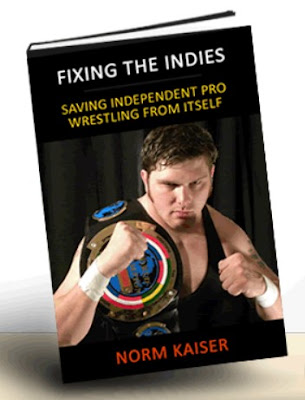
Book Review: Fixing the Indies by Norm Kaiser


Throughout the last 15 years, I have gone to countless small professional wrestling shows. I have travelled to flea markets, gyms, small civic centers, and fairgrounds to support those trying to make a career in squared circle. While a lot of my travels were to support my brother who was working his way up the ranks, along the way I met some great people who put their bodies on the line in name of entertainment. From them, I learned a considerable amount about how the business of wrestling runs.

Years ago, I bought Norm Kaiser’s book “Fixing the Indies: Saving Independent Pro Wrestling from Itself”. I am not sure how I heard of it, but it has been sitting on my shelves for at least five years. One of my new year’s resolutions is to read some of my older books and not get distracted by new book purchases, so I figured Kaiser’s book would be a great curtain jerker for 2022.

(Curtain jerker – wrestling slang for the first match of the night.)

First and foremost, Fixing the Indies was written 10 years ago. Wrestling has changed a lot since, for better and for worse. Some of what Kaiser writes about are still problems with the business, from the top to the bottom. But some of his discussions makes him appear to be a crabby, old man who would be happy if pro wrestling promoters modelled their shows after MMA.

Let’s start with the positives: the book is well put together. It seems self-published and I cannot find any mention of Foxbat Books anywhere on the web. I noticed no typos in the text. I wish the photos were better aligned, but overall, the book is well done for a niche book.

In the book, the biggest positive is Kaiser’s emphasis on REALISM and COMBAT. He makes a lot of sense. Pro wrestling should never be mistaken for synchronized swimming. Unfortunately, pro wrestling shows are filled with “spot fests” – moves planned and performed with athleticism and crowd response in mind, not the acting of a true fight. Kaiser writes that pro wrestling should look like a fight, not a competition to see who can do the most flips, dives, or choreographed stunts. I think he is 100% correct.

Kaiser also gives good advice in regards to professionalism. Looking like a fighter is important. Matching colors are important. Being in shape is important. Having clean, if not, well-presented gear is important. Staying a character is important. I also like Kaiser’s advice that bad guys not mix it up with fans as it detracts from the bad guy’s prime focus of winning the match.

There is also good advice about merchandizing and promotions, but it is a mixed bag with negatives I will discuss shortly. 

Possibly the best part of the book is Kaiser’s book is his breakdown of heels, the bad guys of pro wrestling. Kaiser talks about character a lot. Some I agree with – too many flip-flops, stop listening to internet wrestling “experts”. Some I don’t – he is very negative on gimmicks and the characters that have made wrestling fun. But his analysis on heels was great.

Kaiser breaks down heels into 12 types:

  • The hater
  • The traitor
  • The coward
  • The bully
  • The hothead
  • The whiner
  • The opportunist
  • The sadist
  • The braggart
  • The madman
  • The pretty boy
  • The trash talker

He analyzes what makes each type effective and attractive. He advises not to be all of the above as characters would then be too cartoonish and unbelievable. Heels should work within the constraints of normal human behavior. It is that commonality to the average asshole that makes them hated. 

Now on to the negatives. 

Number 1, first and foremost, is credibility. I have no idea who Norm Kaiser is. There is no bio, no picture, no quotes from established names, no blurbs and reviews, and very few stories from the road. That kills this book. Kaiser can have all the ideas he wants, but unless they have been proven to make money, they are just his opinion. While he has some good points, the only part of the book where he claims to have any knowledge beyond opinion is in the physical fitness portion in the back of the book. There are too many segments that start with “I have been to wrestling matches, and here is what they should do better”. Kaiser needs to prove his bona fides.

Second, Kaiser weighs down the book with way too much social conservativism. He likes a very conservative style of old school wrestling and doesn’t understand the allure of anything else. He doesn’t understand why wrestlers come out to that hippity hop and why anyone would wear anything but trunks to the ring. No makeup, no tattoos, no masks, no jeans, no bare feet, no flair, no individuality. Often times, his social commentary borders on insulting, which hurts his credibility.

Third, even for a 2010 book, there are way too many outdated references. It is clear Kaiser is a late boomer or early Gen-Xer. There are references to M*A*S*H, Dukes of Hazard, Charleston Heston, and other pop culture icons from the 1970s or earlier. Using outdated references is a great way to lose the reader.

Fourth, Kaiser rarely ever mentions women. His only use for women in a wrestling show is as “rainmakers” at merch tables. He suggests promoters find attractive girls with large breasts to work the tables, because that’s what wrestling fans like to see. In nearly 350 pages of wrestling commentary, Kaiser never once discusses female wrestling. Nor does he discuss female wrestling fans, often suggesting that the only people who buy wrestling tickets are male. I know the book is 10 years old, but even then, there were great women working the independent wrestling circuit as well as millions of female wrestling fans.

And if he wasn’t being sexist, Kaiser is also insulting. Especially to anyone he doesn’t understand. For example, he writes that “nerds are typically great photographers, web designers, and computer people” and understanding technology is what makes them “nerds”. He then instructs would-be promoters to find a nerd and get them to do things for the promotion for free. This is straight-up bullshit and reeks of high school jock arrogance. And that is just the insult that stood out the most. There are many others. 

Overall, Fixing the Indies is like an independent wrestling show. There is some good content, some bad content, some cringy attempts at humor, and some outdated content that the promoter wants to shove in there because he likes it. For all it’s flaws, however, there are nuggets worth keeping and it is money well spent.

In conclusion, would I pay to see Kaiser’s promotion? Probably once or twice. More if I knew some of the performers.

Would it have personality? No.

Would it be tighter, cleaner, and more professional than 90% of independent wrestling shows? Yes.

Does Norm Kaiser need to get with the times, stop insulting people, include women, and better understand the audience of modern professional wrestling? Absolutely.

In the words of the ancient philosopher Joe Dirt, "It's not what you like. It's the consumer."


4/5 stars.

Monday, December 21, 2020

Book Review of Curveball at the Crossroads by SportsChump


It always helps to have friends who write. My local friend Chris Humphreys of SportsChump.net volunteered to write a review of Curveball at the Crossroads. 

Although Chris vowed to be as unbiased as possible, I couldn't have asked for a better first review.

Check out what Chris had to say about Curveball at the Crossroads here:

Monday, January 13, 2020

Music to My Years by Cristela Alonzo Review


How do you review a book about someone's life? It is their story. There is no way I could possibly say they didn't tell their story the right way.

But if there is a right way to tell a life story, it is in comedian Cristela Alonzo's book Music to My Years.

Music to My Years is part biography, part musical journey. Cristela breaks down parts of her life by the songs that meant the most to her during those times, from the Golden Girls theme song to a song off the latest Tribe Called Quest album. Each song is like an episode that defines who Cristela is.

Personal backstory: I only "discovered" Cristela about a year ago. I think I saw a clip of her on Comedy Central social media and then followed her Instagram and twitter. I don't watch much TV, so I had no idea she had a show on network TV. I had no idea how long she had done comedy and I had no idea of her backstory. Everything about her was new to me. I just knew she was funny.

As I followed her on social media, I got a feeling about how real she is. Her near-daily social media chronicles her going to Pilates, going to Wal-Mart, going to Disney World, etc. Everything in her life seems so normal. I go to the gym, I go to Wal-Mart, and I have been to Disney.

Celebrities, they are just like you!

Although she has been successful, Cristela doesn't seem like a big shot celebrity. She seems like a real person who really cares about her family and friends. That same persona comes through in her book. She honestly discusses her fears, anxieties, and successes. She talks about the things that held her back, the times she fought to move forward, and the times success made her cry tears of joy.

All of this with a dash of humor and musical trivia.

My background could not be more different than Cristela's. Whereas she grew up poor in a Texas border town, I grew up on Long Island and Central Florida in white middle class suburbia. Everyone I aspired to be either looked like me or was at least my gender. Society never told me "no". So to read Cristela's hopes and dreams was aspiring and made me root for her even more.

Although our roots are different, I could relate to Cristela's career struggle. For the last 10 years, I have been pushing to find a stable career. Something I enjoy, something fulfilling, and somewhere they want me to succeed. Even with two master's degrees and international experience, I have had 9 jobs in 9 years. I live in a small apartment with used furniture and a TV that is old enough to vote because I am not willing to compromise. I want a job that allows me to thrive, not one that is paint by numbers. I will be successful, I guarantee. Just don't put me in a box.

Like Cristela, I have turned down great opportunities because I didn't think they were good fits.

Like Cristela, certain songs have defined who I am. For example, here is a story I have never told before.

In late 2005, I was finishing up my first master's degree. My master's thesis was a 90+ page paper on the Kurdish Peshmerga - the military forces in Northern Iraq. I worked long and hard, burying myself in the university library for weeks on end. I was there so often I was on a first name basis with the library staff. I finally submitted my paper in late November. A few weeks later I was scheduled to defend my research before a panel of professors. Even though I was confident, the ordeal was still stressful.

On the day of my defense, I drove to campus listening to Leela James's song "Long Time Coming" off her first album A Change is Gonna Come. If you have never heard Leela, she is an amazing throwback to when R&B had soul. Her voice comes from the days of Aretha Frankin and Marvin Gaye.

Long Time Coming is one of the last songs on her first album, but I think it is one of the most powerful. It starts out with a blast of horns and then rides into a very funky guitar. After a few moments Leela begins to talk, and then sing one of the most personally inspirational songs I have heard.

Ya'll this evening
Ante up, time to let the trumpets sound
Crown me later, I'm a take my crown now
Been writing for 'bout 10 yrs now
And finally the real truth is coming out
You can't stop it 'cause this is God's plan
I know some of y'all just don't understand
And now ya twisted, can't believe it's me
Get it, it's Leela sho nuff
It's been a long time since ya heard it like this
It's been a long time since ya felt it like this
It's been a long time since ya seen it like this
'Cause ain't nobody bringing it quite like this
I've been praying for a time like this
And I've been waiting for a time like this
I've been talking 'bout a time like this

The entire song is about Leela's struggle to get where she is. On my way to my first academic defense, I didn't want to listen to anything aggressive or anything that would cause me to be too hyped, but I wanted to feel confident. "Long Time Coming" was the perfect song at the perfect time. Every time I have heard it since, I think of that drive to campus in my suit and tie, copies of my thesis in hand, ready to answer any questions about my research the board may have.

Although there were a few questions I stumbled on, I did well. One of the professors even said my thesis was one of the best he had read in a long time. My thesis was approved and I passed my graduate program. A few weeks later I walked across the stage at the graduation ceremony, ready to take on the world.

I like to think Leela James had something to do with my graduation.

Cristela Alonzo's book Music to My Years is all about moments like that. I recommend it.

Saturday, May 14, 2016

Review of Hip-Hop & Philosophy: Rhyme 2 Reason


A few months ago, I picked up the book "Hip-Hop & Philosophy: Rhyme 2 Reason". Published in 2005, the book explores the ideas in hip-hop culture and music and compares them to ideas and concepts in classical and modern philosophy. It attempts to bring academia to pop culture as it discusses the social and impact and messages in hip-hop culture and music.

Overall, I thought the book was pretty good. Especially when it covered what is now "conscious hip-hop" - songs with social lyrics. Also interesting were chapters on the use of the words "nigga" and "bitch" and their impact on listeners. Also covered is an exploration in the messages of inner city struggle and how hip-hop is a vessel for communication, a motivating message, and vent for frustration.

Hip-hop has always been a culture with two sides: a playful, party minded side, where MC and DJ entertain and try to captivate the crowd with wicked wordplay and a blend of beats that keeps folks dancing, and a serious side, where urban story tellers broadcast stories of the streets. What these two sides celebrate or denounce is widely covered in Hip-Hop & Philosophy. For example, the book attempts to answer why lawlessness is often celebrated in hip-hop crime songs. Are these stories fantasy or a reflection of a broken social contract between the artist's environment and his/her society?

The cited works in Hip-Hop & Philosophy is a who's who of lyrical talents. The works of Public Enemy, Nas, Common, Ice Cube, and Dead Prez are often quoted as examples of hip-hop taking a social stand. Meanwhile, quotes by 50 Cent, Nelly, and several others show hip-hop's non-socially conscious and often not socially acceptable side.

My biggest critique with Hip-Hop & Philosophy is in the opening essays. Too often the authors in the beginning of the book try to hard to inject hip-hop slang into the text. For example, Derrick Darby in an attempt to question the power of God, writes how God would be challenged to roll a blunt too big for Him to smoke or how God couldn't create a glock too big for Him to wield. Surely, Darby could have found better examples. Darby also injects far too much slang in his essay, making it almost unreadable.

Co-editor Tommie Shelbie is almost as bad as Darby in his essay on love. With quotes such as "Socrates rocks the mic with heavy doses of logic, irony, and aggression", Shelbie also panders to hip-hop ignorance. Older readers know Socrates never rocked a mic in Ancient Greece and younger readers should be taught honestly Socrates method of communication. It is perfectly acceptable to say he preached or spoke his word to the masses in the manner he did. The point is to make the comparison between modern hip-hop and the ancient philosophers, not to lose readers by making Socrates "hip".

Ten years after its publication, the messages discussed in Hip-Hop & Philosophy are still relevant, perhaps even moreso. There is no doubt this book can help those who don't understand the Black Lives Matter movement. Many of the messages of the movement are spoken in hip-hop and discussed in the book. Of course, also still relevant are the negative elements in hip-hop - the idea that women are "bitches and hoes" and the goal is to make money or acquire power by any means necessary. I wonder what Hip-Hop & Philosophy would say about "trap rap", southern rap, and other sub-genres that have created several culture clashes within hip-hop.

Overall, Hip-Hop & Philosophy wasn't a bad read. It is not a bad book to keep between my philosophy classics and books on African-American culture such as Soul on Ice, Soledad Brother, and the Autobiography of Malcolm X.

Would I read it again? Maybe not cover to cover, but I might reference it at some point when writing about modern social movements.

Overall Grade: B

Sunday, August 4, 2013

Popular Delusions, Witchcraft accusations, and injustice


I've been reading "Extraordinary Popular Delusions and the Madness of Crowds" lately. Written in 1851 by Charles Mackay, the book is a fascinating look at crowd phenomenons and events that have upset social fabrics in Europe, from the 1200s to the 1830s.

Although the chapters on alchemy and the Crusades were interesting, perhaps the most eye-opening chapter was that on witchcraft. For nearly 200 years, people - mostly old, lonely women - were put to death on suspicion of being witches. So bad was the hysteria the onus was on people to prove they were not witches in order to not be put to the stake, drowned, or killed in other cruel devices. They were guilty until proven innocent.

And anyone could accuse anyone of being a witch. Mackay writes of children accusing adults and adults accusing children of witchcraft.

Eventually, the tide turned on accusers, and not only were people they accused innocent until overwhelming evidence could be provided, but soon accusers were prosecuted for faulty accusations.

However, all of Europe did not advance at the same pace. Here is one of the more interesting cases:
Julian Desbourdes, aged fifty-three, a mason, and inhabitant of the village of Thilouze, near Bordeaux, was taken suddenly ill, in the month of January 1818. As he did not know how to account for his malady, he suspected at last that he was bewitched. He communicated this suspicion to his son-in-law, Bridier, and they both went to consult a sort of idiot, named Baudouin, who passed for a conjuror, or white-witch. This man told them that Desbourdes was certainly bewitched, and offered to accompany them to the house of an old man, named Renard, who, he said, was undoubtedly the criminal. On the night of the 23rd of January all three proceeded stealthily to the dwelling of Renard, and accused him of afflicting persons with diseases, by the aid of the devil. Desbourdes fell on his knees, and earnestly entreated to be restored to his former health, promising that he would take no measures against him for the evil he had done. The old man denied in the strongest terms that he was a wizard; and when Desbourdes still pressed him to remove the spell from him, he said he knew nothing about the spell, and refused to remove it. The idiot Baudouin, the white-witch, now interfered, and told his companions that no relief for the malady could ever be procured until the old man confessed his guilt. To force him to confession they lighted some sticks of sulphur, which they had brought with them for the purpose, and placed them under the old man's nose. In a few moments, he fell down suffocated and apparently lifeless. They were all greatly alarmed; and thinking that they had killed the man, they carried him out and threw him into a neighbouring pond, hoping to make it appear that he had fallen in accidentally. The pond, however, was not very deep, and the coolness of the water reviving the old man, he opened his eyes and sat up. Desbourdes and Bridier, who were still waiting on the bank, were now more alarmed than before, lest he should recover and inform against them. They, therefore, waded into the pond--seized their victim by the hair of the head--beat him severely, and then held him under water till he was drowned.

They were all three apprehended on the charge of murder a few days afterwards. Desbourdes and Bridier were found guilty of aggravated manslaughter only, and sentenced to be burnt on the back, and to work in the galleys for life. The white-witch Baudouin was acquitted, on the ground of insanity.
So for no reason, they killed a guy. Then they got off with only aggravated manslaughter. And the ringleader was acquitted.

Amazing.

If you are interested, this book is available for free download here or in html form here. Although it is a bit of a read at over 700 pages, it is worth it just to see how stupid, naive, and insane societies were and continue to be.

Sunday, April 21, 2013

Book Review: The Catcher Was a Spy: The Mysterious Life of Moe Berg


As I have mentioned before, I am a fan of media that combines two or more of my interests. If you make a heavy metal song about Star Wars, I'll listen. If you write about hip-hop in Senegal, I'll read it. This wide array of interests usually makes it easy for people to find things I'll like. I'm not hard to buy for.

Knowing my fan interest in baseball and my professional interest in military intelligence, a few friends included "The Catcher Was A Spy: The Mysterious Life of Moe Berg", a book by Nicholas Dawidoff, in a care package I received last summer. It was a very good call.

I had heard of former baseball player Moe Berg before. I remember reading a magazine article stating he worked for some high-level intelligence agencies during World War 2. Turns out, that magazine article, from Sports Illustrated, was also written by Dawidoff. The Catcher Was A Spy expands on the article and provides results from years of researching perhaps the most mysterious man in baseball history.

According to Dawidoff, Berg filled many roles during his life. He was at one time or another, a student, lawyer, linguist, sightseer, vagabond, advisor, babysitter, consultant, investor, writer,  and of course, catcher and spy. Dawidoff weaves each of these titles into an interesting story, while attempting to reveal the secrets Berg kept from many people he knew.

In the beginning chapters of the book, Dawidoff discusses Moe Berg's professional baseball career and his baseball life intersected with his academic interests. In a nutshell, after a distinguished college career at Princeton, Berg did little at the big league level. A quick aside look-up on Baseball-Reference.com lists him as the 15th worst baseball player with a minimum of 500 games. That's bad. But yet Berg hung on, playing over 75 games three times in a 15-year career. Dawidoff stipulates that Berg's closeness with front office management allowed him to take up a roster spot that might be better given to a minor leaguer.

But although Berg wasn't playing, he was getting smarter. Which according to Dawidoff, is one of the overarching themes of the book. During the baseball chapters, Dawidoff writes about Berg's dalliance with law and business, and how Berg would wow his teammates and coaches with stories and facts few athletes took the time to learn. Dawidoff does state that Berg was also knowledgable of his craft,  so much so that he became an impromptu coach during his last few seasons.

The conclusion of Berg's baseball career in 1942 ends the first part of The Catcher Was A Spy. The second part of the book details as best as possible Berg's work with the Office of Strategic Services (a precursor of the CIA). Through an index full of library research and interviews, Dawidoff pieces together Berg's travels through Europe during WWII and his attempt to acquire as much information as possible about a possible German nuclear or atomic bomb. Here the names sometimes blend together as Berg travels from country to country talking to nuclear scientists and other scientifical types. Dawidoff also writes about Berg's interactions with various intelligence personnel in the OSS, US military, and other branches of government.

By the conclusion of the very lengthy chapter on Berg's spy career, the reader is given the impression that although Berg did some good work, he thought too highly of his own worth. The impression is that Berg believed he was the best spy the CIA had, and could hence run up expense accounts and travel willy-nilly as he wanted, as long as he met with an interviewee on occasion. Dawidoff quotes other intelligence personnel who state that Berg wasn't as big of a deal as he thought himself.

Although this chapter is nearly 50 pages and Dawidoff did what he could in his research, my question is "is that all?". Was all of the Berg information declassified prior to or for the purposes of this book? What information did the CIA or other government organizations not let Dawidoff see? Would they have changed the reader's perception of Berg? Did he do anything greater or more important to national security than what is already mentioned?

Following discussion of Berg's war service, Dawidoff attempts to detail Berg's transformation into an itinerate wanderer. According to Dawidoff, Berg bounced from house to house, taking advantage of friends' kindness and compassion. Dawidoff hints at some awkward moments that give the reader the impression that Berg was a bit social inept, from the story of Berg tickling a little girl alone in a darkened room to Berg's fascination and desire to cling to friends and associates suffering from tragedy.

In the final chapter of the book, Dawidoff tries to piece together Moe Berg. Dawidoff comes to the conclusion Berg was an outsider, unable or unwilling to connect with people in a "normal" sense. Dawidoff suggests Berg's idiosynchrisies derive from his attempts to impress his father, a man who never believed Berg should pursue baseball but should stay in more honorable pursuits. Dawidoff also stipulates Berg suffered from a lack of importance after World War II and set himself adrift, successfully floating until the day he died.

With nearly a 70-page bibliography, The Catcher Was A Spy is an incredibly well-researched book. Is the mysterious Berg a subject worth the research? For sure. Berg was neither a Hall of Famer or a real-life James Bond. But he was was one of the most interesting people to ever play professional baseball and work for the CIA. Thousands of people have done one of the two. Only Moe Berg did both.